

When do I need a built transmission?
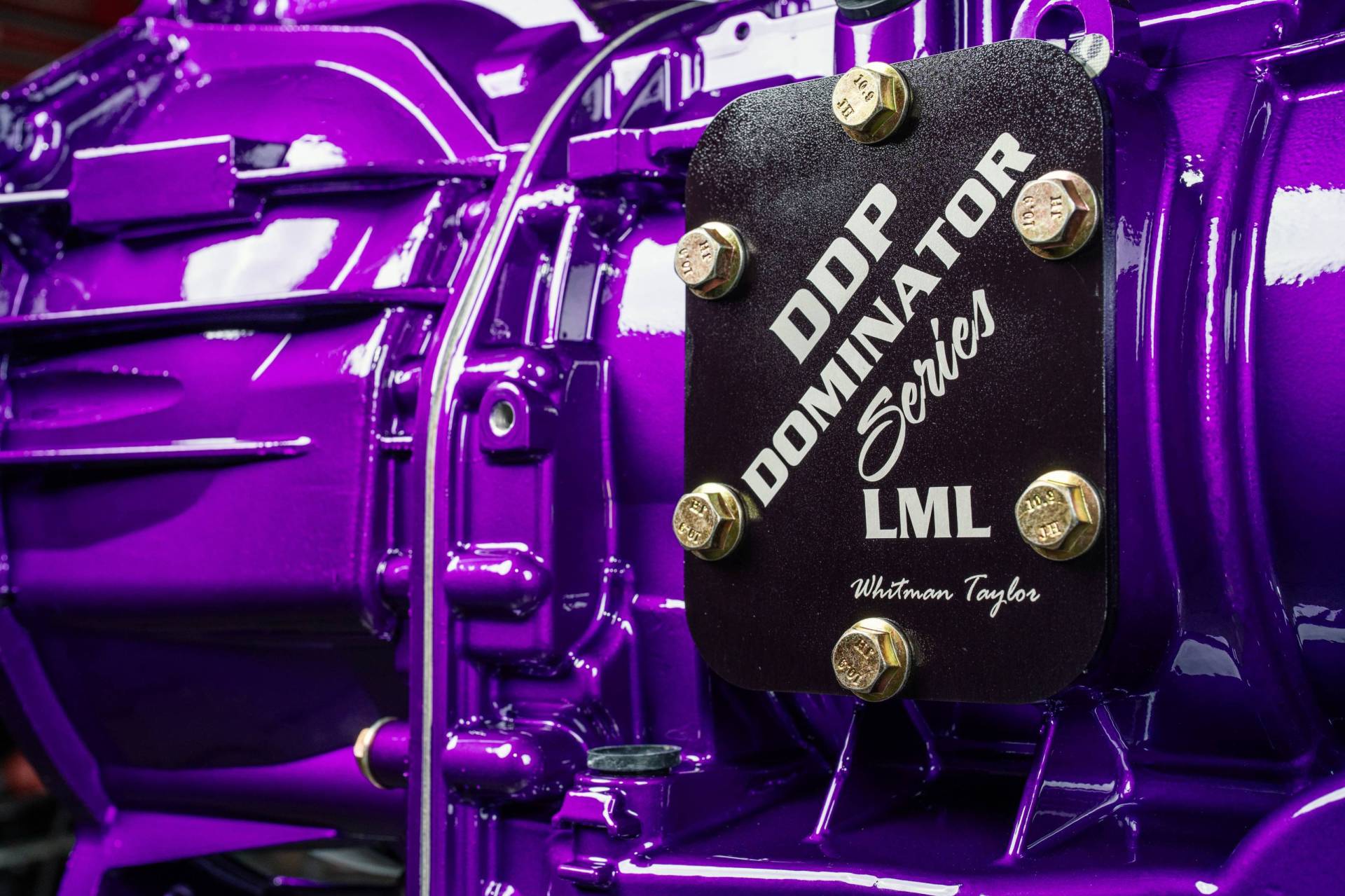
When Does a Built Trans Make Sense? And When Do I Need Billet Internals?
From aggressive tuning on a stock turbo to four-digit horsepower builds, understanding when to upgrade your Allison transmission can be the difference between dependable performance and expensive drivetrain failure.
The Allison transmission has long been one of the defining features of the Chevrolet and GMC Duramax platform. Known for its durability, smooth operation, and ability to handle the demands of heavy-duty diesel trucks, the Allison has earned a strong reputation among truck owners and performance enthusiasts alike.
But even a transmission with a reputation for strength has its limits.
As Duramax owners increase horsepower and torque through tuning, larger turbochargers, upgraded injectors, and additional fueling, the factory transmission is forced to handle significantly greater loads than it was originally designed to withstand.
One of the most common misconceptions in diesel performance is that a built transmission is only necessary after installing a larger turbocharger or reaching an extreme horsepower level.
At Dan's Diesel Performance (DDP), our recommendation is simple: If you're running an aggressive performance tune, even with a stock turbocharger, it's time to seriously consider a built transmission.
That's why DDP offers three levels of Dominator Allison transmissions: the 750HP Street Series, 825HP Comp I, and 1,000HP+ Comp II. Each is designed around a different performance level, with increasingly robust internal components as horsepower demands rise.
Why Aggressive Tuning Can Push a Stock Allison Beyond Its Limits
When discussing transmission upgrades, horsepower tends to get most of the attention. However, torque is often the more immediate concern.
A diesel engine can produce tremendous torque at relatively low engine speeds. When aggressive tuning increases fuel delivery and boost pressure, that additional torque is transferred directly through the torque converter and into the transmission.
Even a truck equipped with its original factory turbocharger can generate enough additional torque to place significant stress on the factory clutch packs, hydraulic system, and rotating components.
Under increased load, clutch packs can begin to slip if their holding capacity is exceeded. That slipping generates heat, accelerates friction-material wear, and can eventually lead to transmission failure.
Hydraulic pressure and clutch-apply characteristics also play an important role. A transmission that cannot consistently apply and hold its clutch packs under increased torque may experience flare-ups, slipping, harsh shifts, or protective operating modes.
This is why DDP recommends a built transmission for customers moving beyond mild tuning and into aggressive performance calibrations.
You do not need a 700-horsepower truck to benefit from a built Allison. An aggressively tuned, stock-turbo Duramax can already justify upgrading to the Dominator Street Series.
Dominator Street Series: The Foundation for Reliable Performance
Dominator Allison Street Transmission — Rated for 750 HP
The DDP Dominator Allison Street Transmission is the entry point into the Dominator lineup, but it is far from a basic rebuild.
Rated for 750 horsepower, the Street Series is designed for daily-driven performance trucks, aggressive stock-turbo applications, towing-oriented builds, and customers who want the additional holding capacity of a professionally built Allison.
For many Duramax owners, this is the transmission that makes the most sense.
Whether the truck is running aggressive tuning on its original turbocharger or has received moderate airflow and fueling upgrades, the Street Series provides an upgraded foundation without immediately requiring the more extensive billet hard parts found in the competition models.
What Goes Into the Street Series?
Every DDP built Allison begins with a complete disassembly and inspection process. Components and housings are thoroughly cleaned, inspected for wear or damage, and reassembled using performance aftermarket and OEM components.
The Street Series includes Alto G3 clutch packs for the C1 and C2 assemblies, along with Alto G3 clutches and Kolene steels for the C3 and C4 assemblies.
These upgraded friction components are intended to provide improved clutch-holding capability under increased engine torque.
DDP also incorporates LML C3 and C4 return spring and piston assemblies, along with TransGo and RatioTek hydraulic upgrades.
These hydraulic improvements are important because a built transmission needs more than stronger friction materials. The hydraulic system must also be capable of controlling clutch application under demanding operating conditions.
The Street Series further includes a sleeved C2 hub for additional strength, new Torrington bearings, new gaskets and seals, a new valve body, internal wiring harness, pressure switch manifold, solenoids, and NSBU switch.
An Allison deep transmission pan, replacement filtration components, and DDP signature PTO covers complete the package.
Who Should Choose the Street Series?
DDP recommends the Street Series for customers who want to protect their investment before transmission problems begin.
If your Duramax has aggressive tuning, even with the stock turbocharger, the Street Series should be strongly considered.
It is also an excellent choice for customers planning moderate turbocharger and fueling upgrades while keeping their ultimate horsepower target at or below 750 HP.
Our recommendation: If you're running an aggressive tune and your goal is 750 horsepower or less, start with the Dominator Street Series.
Explore the DDP Dominator Allison Street Transmission — 750HP
Dominator Comp I: When Billet Shafts Become Important
Dominator Allison Comp I Transmission — Rated for 825 HP
As horsepower climbs beyond the Street Series rating, transmission requirements begin to change.
At this level, building a transmission is no longer exclusively about increasing clutch-holding capacity. The internal hard parts must also withstand greater torque loads and the additional stress associated with high-performance driving.
That's where the DDP Dominator Allison Comp I Transmission enters the lineup.
Rated for 825 horsepower, the Comp I is designed for Duramax owners who have moved beyond moderate street performance and are building trucks with substantial turbocharger and fueling upgrades.
The Comp I retains the upgraded clutch packs, hydraulic improvements, and supporting components found in the Street Series, while introducing important billet drivetrain components.
Why Billet Input and Output Shafts Matter
Inside an Allison transmission, the input and output shafts are responsible for transferring engine torque through the transmission and into the drivetrain.
As torque increases, these components experience greater twisting loads. Aggressive acceleration, hard shifts, and high-traction launches can place additional stress on the shafts.
The Comp I addresses these demands by incorporating both a billet input shaft and billet output shaft.
These upgraded components are designed to provide a stronger foundation for higher-output applications, reducing reliance on the original factory shaft design.
The Comp I also features a sleeved C2 drum, adding reinforcement to another important component within the Allison transmission.
Combined with Alto G3 clutches, Kolene steels, upgraded hydraulic components, new bearings, and a new valve body, these changes make the Comp I a more comprehensive performance build than the Street Series.
Who Should Choose the Comp I?
The Comp I is the logical next step for customers whose horsepower goals exceed the 750HP rating of the Street Series.
For trucks targeting the 750–825 horsepower range, the Comp I provides the upgraded clutch capacity and billet shaft construction needed for a more demanding performance application.
This makes it particularly appealing for trucks equipped with larger drop-in turbochargers, upgraded fuel systems, and aggressive performance calibrations.
Customers planning to increase horsepower in stages should also consider their long-term goals. If a truck is currently producing 700 horsepower but is expected to reach 800 horsepower, choosing the Comp I from the beginning can help avoid paying for another transmission upgrade later.
Our recommendation: If your Duramax is going to exceed 750 horsepower but remain at or below 825 horsepower, the Dominator Comp I is the transmission to choose.
Explore the DDP Dominator Allison Comp I Transmission — 825HP
Dominator Comp II: Built for Four-Digit Horsepower
Dominator Allison Comp II Transmission — Rated for 1,000+ HP
There comes a point in diesel performance where upgrading the clutch packs and primary shafts is no longer enough.
For Duramax owners pursuing extreme horsepower, the internal rotating assemblies and planetary components must also be prepared for the demands of competition-level performance.
The DDP Dominator Allison Comp II Transmission is designed specifically for that level of performance.
Rated for 1,000+ horsepower, the Comp II is the most comprehensive Allison transmission package in the DDP Dominator lineup.
It builds on the foundation established by the Street Series and Comp I, incorporating additional billet components intended to support substantially greater torque and horsepower.
Beyond Billet Shafts: Strengthening the Entire Rotating Assembly
The Comp II includes the billet input and output shafts found in the Comp I, but the upgrades don't stop there.
DDP adds a billet C2 drum, billet P2 planetary assembly, and billet intermediate shaft.
These components represent a significant step beyond a conventional performance transmission build.
The C2 drum is a critical part of the Allison's clutch and rotating assembly. Replacing the reinforced drum design used in the Comp I with a billet C2 drum provides an upgraded component for more demanding operating conditions.
The P2 planetary assembly is responsible for transmitting torque through the transmission's geartrain. In extreme horsepower applications, the planetary assembly and its associated components must withstand substantial mechanical loads.
The billet intermediate shaft further strengthens the transmission's internal torque path.
By upgrading these components together, the Comp II addresses multiple areas of the transmission rather than concentrating only on clutch capacity or the input and output shafts.
The Comp II also includes Alto G3 clutch packs, Kolene steels, TransGo and RatioTek hydraulic upgrades, new internal electrical components, a new valve body, new Torrington bearings, a new pump, and an Allison deep pan.
Why 825 Horsepower Is the Turning Point
At DDP, our transmission recommendations follow a straightforward progression.
For applications at or below 750 horsepower, the Street Series provides a strong performance foundation.
For applications above 750 horsepower and up to 825 horsepower, the Comp I introduces billet input and output shafts along with additional internal reinforcement.
Once your horsepower goal exceeds 825 HP, we recommend stepping into the Comp II.
Although the Comp II is rated for 1,000+ horsepower, it isn't exclusively intended for trucks that have already reached four-digit power levels.
Customers building 850, 900, or 950-horsepower Duramax trucks should also consider the Comp II, particularly when the vehicle will see drag racing, sled pulling, or other demanding high-load use.
For the four-digit horsepower crowd, the Comp II provides the most comprehensive billet internal package available in the DDP Dominator transmission lineup.
Our recommendation: If your Duramax is going beyond 825 horsepower, choose the Dominator Comp II. For customers targeting 1,000 horsepower or more, this is where the build needs to start.
Explore the DDP Dominator Allison Comp II Transmission — 1,000HP+
Dominator Allison Transmission Comparison: Street vs. Comp I vs. Comp II
Each Dominator transmission is designed around a specific horsepower range and level of internal reinforcement. The chart below compares the three builds and highlights the major differences.
| Feature | Street Series | Comp I | Comp II |
|---|---|---|---|
| Horsepower Rating | 750 HP | 825 HP | 1,000+ HP |
| Recommended Application | Aggressive tuning to 750 HP | Above 750 to 825 HP | Above 825 HP |
| Alto G3 Clutches | Yes | Yes | Yes |
| Kolene Steels | Yes | Yes | Yes |
| Hydraulic Upgrades | Yes | Yes | Yes |
| Billet Input Shaft | No | Yes | Yes |
| Billet Output Shaft | No | Yes | Yes |
| C2 Hub / Drum Upgrade | Sleeved C2 Hub | Sleeved C2 Drum | Billet C2 Drum |
| Billet P2 Planet | No | No | Yes |
| Billet Intermediate Shaft | No | No | Yes |
| Allison Deep Pan | Yes | Yes | Yes |
| Best For | Daily drivers and aggressive street tunes | High-horsepower street builds | Extreme performance and competition |
Horsepower ratings reflect DDP's advertised transmission ratings. Actual durability depends on torque delivery, vehicle weight, traction, operating conditions, tuning, installation, and maintenance. Individual builds should be discussed with DDP to confirm the appropriate configuration.
Should You Wait Until Your Stock Transmission Starts Slipping?
One of the biggest mistakes a performance Duramax owner can make is waiting until the factory transmission begins to fail before considering an upgrade.
Clutch slipping is more than an inconvenience. Once friction material begins to deteriorate, the resulting heat and debris can contaminate transmission fluid and contribute to additional internal wear.
Repeated slipping can accelerate damage to clutch packs, steels, hydraulic components, and other internal assemblies.
For customers planning significant performance modifications, upgrading the transmission before failure can be a more predictable approach than waiting for a damaged unit to require extensive repairs.
This is especially important for trucks that will see repeated wide-open-throttle acceleration, towing under increased power, or high-traction launches.
Rather than viewing a built transmission as a repair after something breaks, DDP encourages customers to consider it part of the overall performance package.
Do You Really Need Billet Internals?
Not every Duramax needs a fully billet-equipped transmission.
For many owners, the primary concerns are clutch-holding capacity, hydraulic control, and the ability to handle aggressive tuning. That's where the Street Series makes sense.
As horsepower rises beyond 750 HP, the Comp I introduces billet input and output shafts to strengthen the transmission's torque path.
Once the build moves beyond 825 HP, the Comp II adds billet components throughout more of the rotating assembly, including the C2 drum, P2 planetary assembly, and intermediate shaft.
The goal isn't simply to install as many billet components as possible. It's to select the appropriate level of internal reinforcement for the power and operating conditions the transmission will experience.
For DDP customers, the recommendation is clear: Street Series up to 750 HP, Comp I above 750 through 825 HP, and Comp II for anything beyond 825 HP.
Why the Build Process Matters
A high-performance transmission is only as good as the components and workmanship behind it.
At Dan's Diesel Performance, building an Allison begins with complete disassembly, cleaning, and inspection.
Every component must be evaluated for wear, damage, and suitability before reassembly. Performance clutch packs, hydraulic upgrades, bearings, seals, and internal hard parts are then selected according to the transmission's intended horsepower rating.
DDP's Dominator transmissions also incorporate replacement internal electrical components and valve bodies as part of the build process.
Proper installation and cooling-system preparation remain essential. DDP requires the transmission cooling system to be professionally hot-flushed or replaced, helping prevent contamination from damaging the new transmission.
All three Dominator transmission listings also advertise a five-year, unlimited-mileage warranty against specified defects in parts and workmanship, subject to the applicable warranty terms.
These details are important because building a transmission involves far more than replacing friction materials or installing billet shafts.
It's about creating a complete assembly capable of delivering consistent performance under the conditions it was designed to handle.
Build the Transmission for Where Your Truck Is Going
When planning a Duramax performance build, it's important to consider not only the horsepower the truck makes today, but also the horsepower it may make in the future.
A customer running an aggressive tune on a stock turbocharger may be perfectly suited for the Street Series.
But if that same customer plans to install a larger turbocharger, upgrade injectors, and eventually target 800 horsepower, choosing the Comp I from the beginning may be the better long-term investment.
Likewise, a truck currently making 800 horsepower but being prepared for a 1,000-horsepower build should be considered for the Comp II.
Choosing the right transmission from the start can help prevent unnecessary repeat upgrades as the rest of the truck evolves.
Final Thoughts: When Does a Built Transmission Make Sense?
For Duramax owners, the answer is often sooner than expected.
Even with a stock turbocharger, aggressive tuning can introduce enough additional torque to justify upgrading the factory Allison transmission.
For trucks making up to 750 horsepower, the DDP Dominator Street Series offers upgraded clutch packs, hydraulic improvements, and reinforced components designed for performance-oriented daily driving.
For builds exceeding 750 horsepower and reaching up to 825 horsepower, the Dominator Comp I adds billet input and output shafts along with additional internal reinforcement.
And for customers moving beyond 825 horsepower, the Dominator Comp II introduces a more comprehensive billet internal package designed for extreme performance and 1,000HP+ applications.
At Dan's Diesel Performance, our philosophy is simple: Build the transmission for the power you plan to make, not just the power you're making today.
Ready to upgrade your Allison? Shop the complete DDP Dominator Allison transmission lineup or contact Dan's Diesel Performance to discuss the right transmission for your Duramax build.